
Ormond Beach, FL · Garage Door Service
Why Pre-1986 Doors in Ormond Beach Leak Heat and Jam in the Damp
Most Ormond Beach garage doors date to the 1972-1999 building run, years before insulation codes. Here's what that uninsulated steel does in our mild, salty climate.
- Repairs & new doors
- Springs & openers
- Serving 8 nearby communities
The Problem
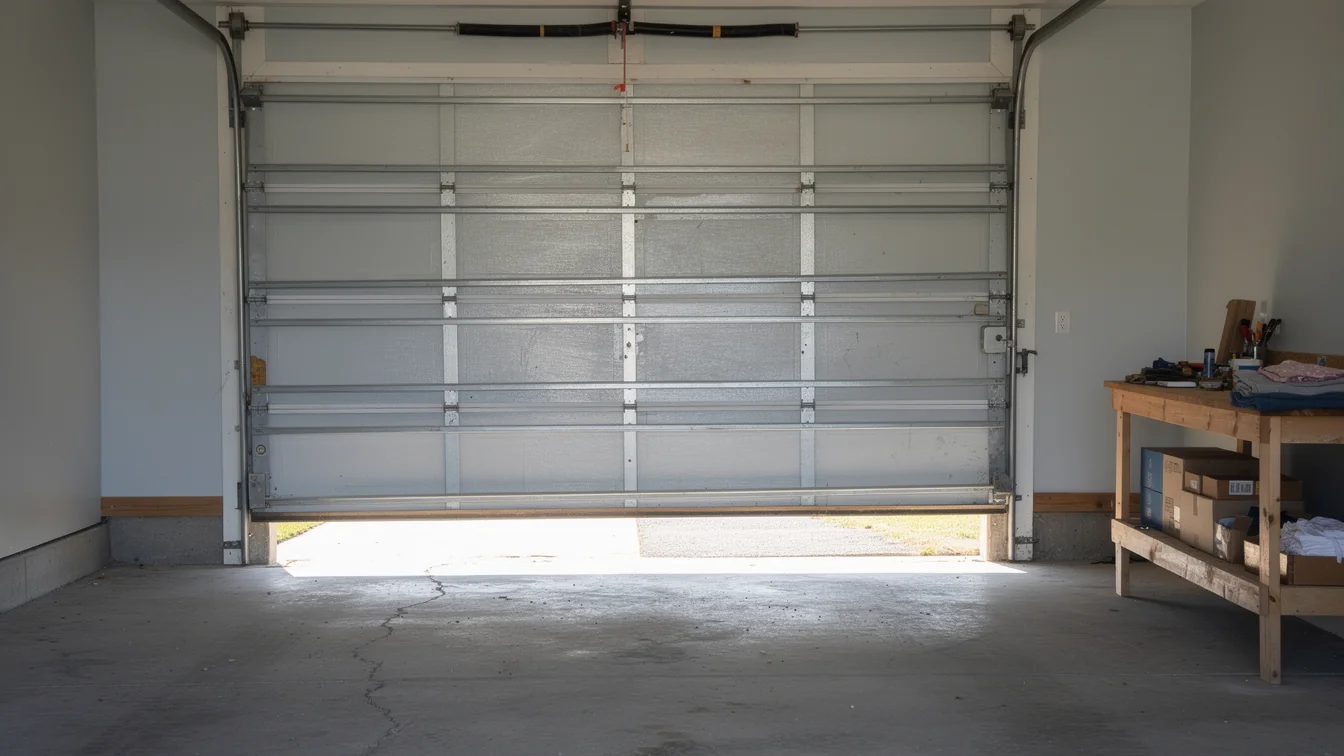
Most of the housing stock in Ormond Beach went up between 1972 and 1999, with the median build year landing right at 1986. That's the detail that matters: the energy codes that forced garage door makers to add foam cores and thermal breaks came later. A door hung on a house built in '86 is almost certainly a single skin of steel over an air gap, sometimes with a thin vinyl backing and nothing else. It was never built to hold a temperature or keep humid air out, because nobody asked it to.
Across the nine named pockets that make up this service area, the pattern repeats - 1980s and 90s construction dominates. That means the same door, the same hardware era, the same weak point: a seam between panels that was fine on day one and has been working loose for thirty-some years. Owners notice it as a draft along the bottom, a door that feels heavier in July than it did in February, or a faint mildew smell near the header that won't go away no matter how often the slab gets wiped down.
It isn't one bad batch of doors. It's a whole era of construction meeting a stretch of decades it wasn't specified for.
The Common Mistake
The mistake we see most is owners treating an uninsulated 1980s door like a sealing problem instead of a materials problem. They add a new bottom astragal, maybe a strip of foam tape along the top rail, and expect the draft and the condensation to stop. It helps a little. It doesn't fix the panel.
A single layer of steel with no thermal break will still sweat on the inside face whenever the air on either side of it disagrees, which in a mild temperate climate like this one happens often - not violently, just constantly. Weatherstripping manages air leaks. It does nothing about a cold steel skin meeting warm moist air and beading up on the inside of the garage.
The other version of this mistake is spending money retrofitting insulation panels into a thirty-year-old frame that's already racked slightly out of square from decades of expansion and contraction. We can do it. We don't usually recommend it. Hand-fitting foam board into an old single-layer door costs more in labor than most owners expect, and the fit is never as tight as a factory insulated panel. Past a certain age, replacing the door is the cheaper fix, not the more dramatic one.
When to Get Help
Call before the door stops working, not after. On a door from the 1972-1999 run, the torsion spring and the panel skin are usually original, and in this service area - 13,932 owner-occupied houses out of 28,058 households - a large share of what we see is exactly that: a builder-grade door nobody's touched since the house was new.
Get it looked at if you notice rust freckling along the bottom panel seam, if the door feels noticeably heavier to lift by hand than it used to, or if there's a damp, slightly sour smell that clears when the door's open and comes back when it's shut. Those are signs the steel skin is holding moisture it was never built to shed.
Don't wait for a spring to snap. A door that's been sweating on the inside for years is also a door whose hardware has been sitting in that same damp air. We'd rather replace a tired spring on a Tuesday than get a call about a jammed, fully-loaded torsion bar on a Saturday.
What the Weather Here Does to It
Ormond Beach sits in a mild temperate band - no hard freezes to crack a panel, no desert swing to bake the seals dry. That sounds easy on a door, and in some ways it is. There's no freeze-thaw cycle working metal fatigue into the hinges the way it does further north.
What the mild, humid air does instead is slower and less dramatic: it sits. Salt-tinged, moisture-heavy air near this stretch of coast doesn't flush out the way a drier climate's would, and an uninsulated steel door built in the 80s or 90s has no barrier against it. The result is corrosion that starts from the inside of the panel, not the outside - rust blooming behind the paint where nobody checks until the skin is already thin.
At median incomes around $67,389 in this area, most households aren't budgeting to replace a garage door on a schedule. They replace it once something fails. That's reasonable. It just means a lot of 1986-vintage doors are still out there quietly corroding from the inside, and the first visible sign is usually a seam that's gone soft, not a dramatic failure.
Frequently asked questions
Why does my garage door sweat on the inside even though it never freezes here?
Because it's a single layer of steel with no thermal break, which is typical for houses built in the 1972-1999 run that makes up most of Ormond Beach. In a mild, humid climate the steel doesn't need a freeze to sweat - it just needs the air on either side to disagree, which happens most of the year.
Is it worth insulating an old garage door instead of replacing it?
Usually not. Hand-fitting foam into a thirty-year-old frame that's already slightly out of square costs more in labor than the foam itself, and the fit never matches a factory insulated panel. Past a certain age, replacing the door is the cheaper, more reliable fix.
How do I know if my door's original to the house?
If your house was built in the 1980s or 90s - which covers most of this area - and the door has never been replaced, it's almost certainly a single-skin steel panel with no insulation. Rust freckling along the bottom seam or a door that feels heavier to lift are the usual tells.
Related garage door services in Ormond Beach
More garage door guides
Book garage door service in Ormond Beach
Call now or request a quote - tell us what the door is doing and where you are.